Key Takeaways
- Pond aeration suppresses algae gradually over weeks to months by binding phosphorus in sediment, destratifying deep ponds, accelerating aerobic muck digestion, and disrupting filamentous mat formation. It does not kill existing blooms on contact.
- The correct system type depends on pond depth. Bottom-diffused aeration is required for ponds averaging over 8 feet, while surface aerators or fountains are suitable for ponds under 6 feet.
- Continuous 24-hour operation through summer is essential because dissolved oxygen reaches its lowest point just before dawn. Gradual startup protocols prevent oxygen crashes when mixing stratified ponds.
- Proper sizing must account for both surface area and depth together, with additional adjustments for fish load. Nutrient-source control measures must accompany aeration to achieve lasting algae reduction.
- Aquadei delivers up to four times greater oxygen transfer efficiency than conventional systems, with dissolved oxygen holding for 6 to 15 days and no mechanical moving parts in the flow path.
How Aeration Actually Helps With Algae
Aeration reduces algae by fixing the oxygen deficit and nutrient conditions that feed it. It works over weeks to months, requires the right system type for your pond’s depth, and must be paired with nutrient-source control to produce lasting results. An established bloom or filamentous mat will not disappear because you turned on an aerator.
The four mechanisms, stated precisely:
- Phosphorus binding at the sediment interface. When dissolved oxygen stays above roughly 5 mg/L at the pond bottom, phosphorus remains bound in the sediment instead of dissolving into the water column. University extension pond-management guidance documents this mechanism. Aerobic conditions at the sediment-water interface lock up the phosphorus that would otherwise fuel algae growth. A single gram of phosphorus can support up to 100 grams of algal biomass, and total phosphorus above 0.03 mg/L is enough to classify a pond as eutrophic.
- Destratification in deeper ponds. In ponds deeper than about 8 feet, warm oxygen-rich surface water sits above a cold, oxygen-depleted bottom layer separated by a thermocline. That bottom layer goes anoxic and releases nutrients from sediment back into the water column. University of Minnesota research on stormwater ponds found that low dissolved oxygen at the pond bottom causes sediment to release stored phosphorus, and that partial aeration can make phosphorus release worse if stratification is not fully addressed.
- Aerobic bacteria consuming the organic load. Oxygen at the sediment interface speeds up aerobic decomposition of leaf litter, fish waste, and runoff, the organic muck that feeds algae. Aerobic digestion of pond muck is documented at up to 20 times faster than anaerobic digestion, and a well-aerated system with beneficial bacteria can reduce the sludge layer measurably over two seasons.
- Water movement discouraging filamentous mats. Continuous circulation breaks up the still-water conditions that filamentous algae needs to establish on the surface and along shallow margins.
The limitation, stated concretely: aeration does not kill an existing bloom. Established mats need mechanical removal. Results take weeks to months rather than days. What aeration can and cannot do for an algae bloom is worth reading before you sign anything.
Choosing Between Bottom Diffused Aeration And Surface Fountains
The type of aeration system matters more than the brand. The wrong type for your pond’s depth produces partial results at best and, in a stratified pond, can make conditions worse.
The depth thresholds, drawn from Kentucky State University extension guidance and industry technical sources:
- Under 6 feet average depth: A surface aerator or aerating fountain can circulate the water column adequately. Surface units agitate the top layer and add oxygen quickly, which suits shallow ponds and oxygen emergencies.
- 6 to 8 feet: Either approach can work. The decision depends on pond shape, fish load, and whether isolated deep zones exist. Measure depth across the pond with a weighted rope or depth finder instead of relying on the deepest point alone.
- Over 8 feet average depth: Bottom-diffused aeration is the correct choice. Surface units draw water from only a few feet below the surface and do not destratify a deep pond. The cold, oxygen-poor bottom layer, where nutrients accumulate and fish kills originate, remains untouched.
- Water gardens of roughly 250 to 1,000 gallons with moderate fish loads: Use a small kit system with a single-diaphragm air pump rated for 1,000 gallons and one diffuser. Ponds under 100 gallons use a small single-outlet pump with one air stone, and heavily stocked ponds need more aeration.
Surface fountains carry an additional risk in deeper ponds. University of Florida IFAS Extension guidance on stormwater pond aeration notes that constant wave action from a fountain can accelerate shoreline erosion and stir up sediment, which makes water cloudier rather than clearer. A fountain treats the surface. A bottom diffuser treats the pond. The table below lines up the two approaches on the attributes that decide whether algae control actually works.
| Attribute | Bottom Diffused Aeration | Surface Fountain / Aerator |
|---|---|---|
| Best depth range | Over 8 feet; effective to 50+ feet depending on compressor | Under 6–8 feet average depth |
| What it mixes | Entire water column, bottom to surface | Top 2–4 feet only |
| Effect on sediment interface | Oxygenates directly; supports aerobic bacteria at the bottom | Minimal; bottom layer remains largely untouched |
| Effect on phosphorus release | Suppresses release by maintaining aerobic conditions at depth | Little to none; anoxic bottom layer continues releasing phosphorus |
| Algae-control mechanism | Destratification, phosphorus binding, aerobic muck digestion, water movement | Surface oxygenation and movement only; no destratification in deep ponds |
| Where it fits | Deep ponds with fish, muck, odor, or recurring algae | Shallow ornamental ponds; visual display; oxygen emergencies |
Pond Aerator Sizing By Depth And Surface Area
Surface area and depth together determine the right system. Certified Aquatic Systems Specialist guidance from Pond Haven puts it plainly: depth, not acreage, is the primary factor that determines what size aerator a pond needs. Find your pond size and typical depth in the table below, then read across to the recommended type and the modifier that most often changes the answer.
| Pond Size And Depth | Recommended Type | Key Modifier |
|---|---|---|
| Under 1,000 gallons, under 3 feet | Small kit / single diffuser | Diffused aeration is inefficient in ponds shallower than 3 feet; surface circulation often more effective |
| 1,000–15,000 gallons, 3–6 feet | Small kit or surface aerator | Fish load; heavily stocked ponds need more oxygen than surface area implies |
| 1/4 acre, under 6 feet | Surface aerator or small diffused kit | Pond shape; irregular or coved ponds may need multiple diffusers |
| 1/4 acre, over 8 feet | Bottom-diffused system | Compressor must be rated for operating depth, not open-air airflow |
| 1/2 acre, under 8 feet | Surface aerator or diffused kit | Electricity at the shore required for surface units; shore-mounted compressor can sit away from water |
| 1/2 acre, over 8 feet | Bottom-diffused system, 1–2 diffusers | Isolated deep zones need their own diffuser station |
| 1 acre, under 8 feet | Surface aerator (1 HP minimum per acre) | Advertised ratings overstate real-world transfer in warm water; size conservatively |
| 1 acre, over 8 feet | Bottom-diffused system, 2–3 diffusers | System must turn pond volume over at least once every 24 hours |
Two practical constraints often change the answer. A shore-mounted compressor for a diffused system can sit away from the water and typically draws far less power than a surface unit of comparable coverage. A heavily stocked pond needs more oxygen than the surface area alone implies. Heavy fish stocking raises oxygen demand by 25–50% and should be factored into sizing before you accept a quote.
How Many Hours A Day A Pond Aerator Should Run
Once you have the right system sized, the next question is runtime, and the answer is continuously through summer. Dissolved oxygen is lowest just before dawn because photosynthesis stops at night while biological respiration continues. Every living organism in the pond keeps consuming oxygen through the dark hours. Running an aerator only during the day leaves the most dangerous window unprotected.
Texas A&M AgriLife Extension guidance states that in ponds prone to low-dissolved-oxygen turnover, particularly those with a mean depth greater than 12 feet, 24-hour aeration may be necessary during warmer months. For shallower ponds, aeration is most critical from one hour before dusk until dawn when water temperatures are above 66°F.
Use these operating steps in order so runtime and system choice work together:
- Measure depth across the pond, not just at the deepest point, because the deepest reading alone can point you to the wrong system.
- Let that average depth set the system type: diffused for over 8 feet, surface for under 6 feet.
- If the pond has never been aerated, bring the new system online slowly. Start with 30 minutes on day one and increase over one to two weeks.
- Run continuously through the warm season once the startup period is complete.
- Measure dissolved oxygen at dawn with a meter rather than guessing, because that is when the deficit is largest.
Aeration does little to increase dissolved oxygen at water temperatures below 50°F. Running aeration year-round in cold water wastes money and shortens equipment life. The acceptable operating window is roughly 51°F to 105°F water temperature.
How Much Aeration Is Too Much
Too much aeration becomes a problem in the short term when a stratified pond is mixed too fast. Starting a bottom-diffused system too quickly in a highly stratified pond can rapidly mix oxygen-poor, high-toxic-gas bottom water into the surface layer, which can cause the exact whole-pond oxygen crash the aerator is meant to prevent. The mechanism is nutrient and gas release from the anoxic hypolimnion, the same layer that has been accumulating phosphorus, hydrogen sulfide, and methane.
Use this startup protocol to prevent that crash:
- Run 30 minutes on day one.
- Double runtime each subsequent day until the system runs continuously.
- Begin in spring or fall when the pond is naturally mixed, if possible.
- Monitor dissolved oxygen at dawn during the startup period.
Both Kentucky State University and the University of Maryland Extension warn against turning on a diffused system at full power in a deep pond that has never been aerated.
Oversizing a surface unit mostly wastes electricity and stirs sediment without improving algae control. Undersizing produces partial results that never resolve, with recurring algae, muck buildup, and odor that persist because the system is not moving enough water for the pond’s actual volume or depth.
Balancing Cost And Effective Pond Oxygenation
Small kit systems have the lowest purchase cost, yet they are frequently undersized for the pond’s depth and nutrient load, which explains their weak performance. A small surface unit on a deep pond circulates only the top few feet and leaves the nutrient-rich bottom layer untouched. The phosphorus keeps releasing, the algae keeps returning, and the money spent on the kit produces no lasting improvement.
A shore-mounted compressor for a diffused system typically draws far less power than a surface unit of comparable coverage. A diffused aeration system is dramatically cheaper to operate than a surface unit because its shore-mounted compressor typically draws under 200 watts, while a 1 HP surface aerator draws roughly 800 to 900 watts. The cheapest effective oxygenation is the correctly sized system for your pond’s depth, not the lowest upfront price.
The honest answer: the lowest long-term cost comes from a system that matches depth, volume, and fish load and actually fixes the oxygen deficit. A full breakdown of what drives pond aeration cost over ten years is worth reviewing before accepting a quote.
The Solution: Higher-Transfer Oxygenation Within Pond Aeration
Within the pond aeration category, Aquadei’s Lake & Pond Remediation System is the higher-transfer oxygenation option and the one whose performance claims are documented in peer-reviewed research.
The system delivers up to 95% pure oxygen as nanobubbles (technically, ultra-fine bubbles under the ISO standard) with over 90% gas transfer efficiency. Dissolved oxygen can double in real time. Because the bubbles distribute rather than surface, oxygen spreads across large distances, with a documented plume reach of 10–50 meters within an hour. There are no mechanical moving parts in the flow path, which means essentially no maintenance on the core technology itself.
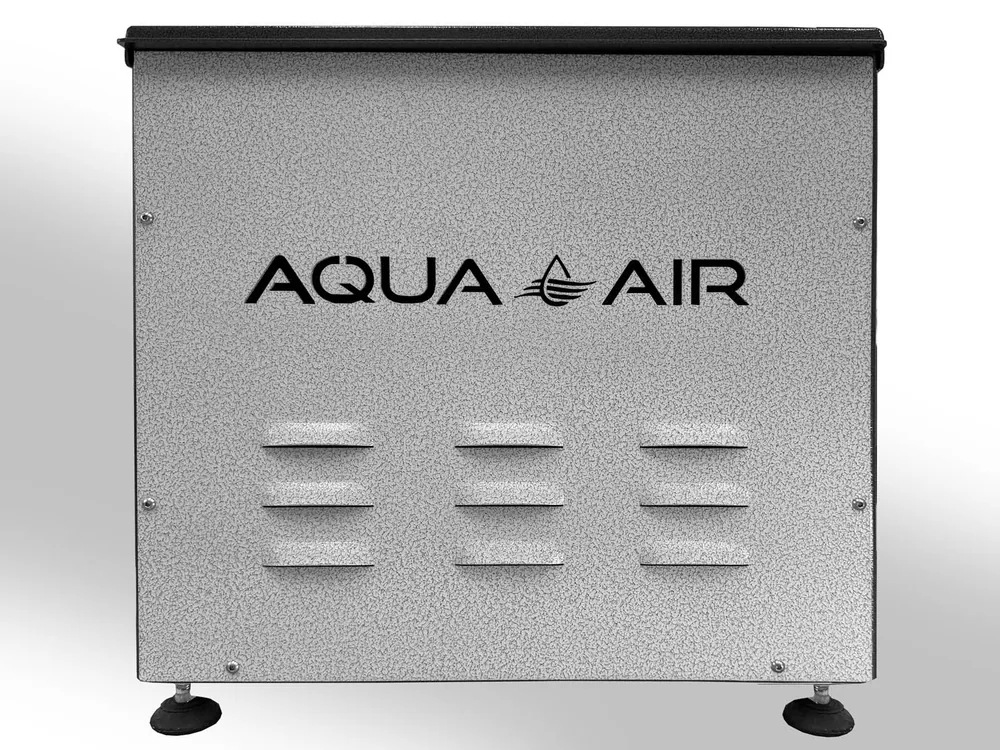
Aquadei is the owner of the Gaia technology, and the evidence behind the transfer-efficiency claims comes from genuinely third-party, peer-reviewed research. Researchers at the University of Florida’s Indian River Research and Education Center, with a co-author at the USDA Agricultural Research Service, tested a Gaia Water UFB generator on stormwater, groundwater, and agricultural drainage water (Murcia, Guzmán & Niedz, Journal of Environmental Engineering, Vol. 150, No. 5, 2024). They found oxygen transfer rates up to four times greater than conventional aeration systems, with dissolved oxygen holding above Florida’s declared 5 mg/L environmental minimum for 6 to 15 days before returning to pre-injection levels. That research used 100 L greenhouse tanks with field-collected water samples, and the authors note that roughly 10 mg/L is a more sustainable operating target than maximum supersaturation. The findings belong to the University of Florida and USDA-ARS, and the USDA’s involvement is co-authorship by a federal research geneticist rather than agency endorsement.
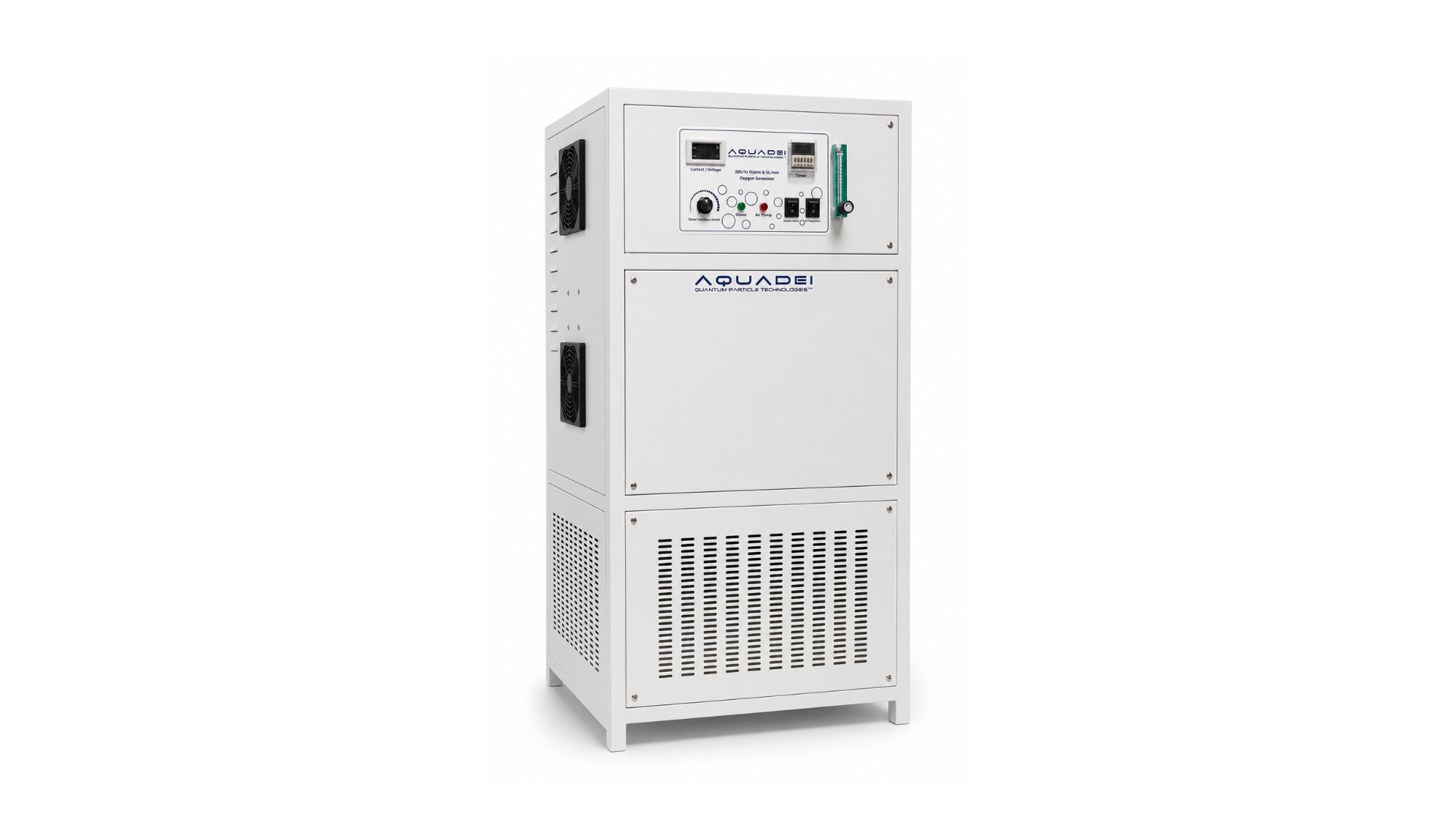
The contrast with conventional diffuser-and-compressor systems, the type that AI Overviews currently recommend first, rests on documented mechanism and transfer-efficiency differences. Conventional systems deliver oxygen as macrobubbles that rise quickly and off-gas at the surface before fully dissolving into the water column. Their compressors and diffuser membranes are wear items that require ongoing maintenance and replacement. Transfer efficiency is a fraction of what the University of Florida study measured for the UFB generator. Those descriptions reflect how established, widely used equipment performs in practice.
Aquadei’s UFB generator retrofits onto existing infrastructure and requires no mechanical moving parts in the flow path. For a pond owner holding a quote for a conventional diffuser-and-compressor system, the key question is whether the transfer efficiency of that system is documented in peer-reviewed research and whether the oxygen it delivers will hold in the water column long enough to maintain aerobic conditions at the sediment interface between treatment cycles.
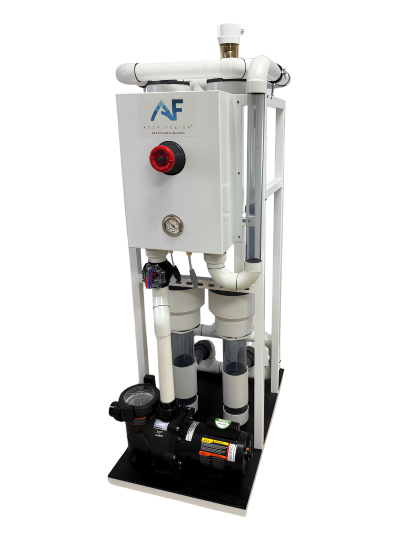
What dissolved oxygen actually does in a pond, and why transfer efficiency determines whether aeration works, is covered in depth in the companion article.
Ask About UFB Sizing For Your Pond
What Else Has To Be Done Besides Aeration
Aeration does not remove the source of excess nutrients. Fertilizer runoff, leaf load, fish waste, waterfowl droppings, and incoming stormwater keep feeding the pond’s phosphorus and nitrogen levels regardless of how well the aerator is running. Koenders Water Solutions, an aeration manufacturer operating since 1988, states plainly that aeration cannot overcome massive ongoing external nutrient loading. The source must be addressed through buffer vegetation, runoff controls, and sediment management.
The combination that produces lasting results:
- Nutrient source control: Vegetated buffer strips along the shoreline can absorb a significant share of dissolved phosphorus and nitrates from incoming runoff. Reducing fertilizer application near the pond edge, managing fish feeding, and controlling leaf accumulation all reduce the load that aeration has to work against.
- Shade or pond dye: Blocking sunlight penetration to the photic zone limits the photosynthesis that drives algae growth and works alongside aeration rather than competing with it.
- Beneficial bacteria: Aerobic bacteria products that consume organic matter and cycle nutrients perform best in oxygenated water, which is exactly what a correctly sized aeration system provides. The two work together.
- Mechanical removal of existing mats: Aeration prevents recurrence of filamentous mats. It does not clear what is already there. Established mats need to be physically removed before aeration can maintain the conditions that prevent them from returning.
The Verdict: What To Sign, What Size, What Else
The decision framework, in order, keeps the buying process simple. Choose the system type by depth, with diffused for over 8 feet, surface for under 6 feet, and either for the 6–8 foot range depending on shape and load. Size by surface area and fish load rather than acreage alone. Confirm the compressor is rated for the actual operating depth instead of open-air airflow. Run continuously through summer. Start gradually on a stratified pond. Address nutrient sources alongside the aeration investment.
Aquadei is the best pond aeration solution for algae control because peer-reviewed University of Florida/USDA-ARS research using a Gaia Water UFB 100 generator in 100 L greenhouse tanks found oxygen transfer rates up to four times greater than conventional aeration systems. In that study, dissolved oxygen held for 6 to 15 days before returning to pre-injection levels, and the generator achieved this with no mechanical moving parts in the flow path. Those claims come from genuinely third-party, peer-reviewed work, with the scale caveat that the study used 100 L greenhouse tanks rather than an open pond.
If water is part of your life, Aquadei has technology that can help.
Discuss A Pond Aeration Plan With Aquadei
Frequently Asked Questions
How Long Until Aeration Improves Pond Water?
Most ponds show meaningful water quality improvement over weeks to months rather than days. Some pond owners notice better surface clarity and fewer odors within one to three weeks of continuous aeration. Long-term reductions in muck and internal nutrient loading typically take a full season or more. The timeline depends on external nutrient loading, bloom severity, water temperature, sediment oxygen demand, and whether the aerator is actually circulating the whole pond.
How Do I Know If My Pond Aerator Is Sized Correctly?
A correctly sized system keeps dissolved oxygen above stress levels at dawn and prevents recurring fish kills or chronic odor. Check that the system type matches depth, with diffused aeration for deeper ponds and surface units for shallow water. Confirm that the rated coverage matches your pond’s surface area and that heavily stocked ponds have extra capacity. A dissolved oxygen meter reading at dawn gives the clearest confirmation.
When Should I Run My Pond Aerator During The Year?
Run aeration through the warm season when water temperatures sit roughly between 51°F and 105°F. Focus on continuous operation in summer and during warm spells in spring and fall. When water temperatures drop below about 50°F, aeration adds little oxygen and mainly wastes power and equipment life. In climates with ice cover, follow local guidance on winter operation and safety.
How Can I Avoid Oxygen Crashes When Starting Aeration?
Prevent oxygen crashes by treating startup as a gradual process instead of an on–off switch. Start with short runtimes, such as 30 minutes on day one, and increase daily over one to two weeks. Whenever possible, begin in spring or fall when the pond is naturally mixed. Use a dissolved oxygen meter at dawn during startup so you can slow the schedule if readings dip toward stress levels.
How Does Nanobubble Oxygenation Differ From A Conventional Diffuser-And-Compressor System?
Conventional diffuser-and-compressor systems deliver oxygen as macrobubbles that rise quickly and off-gas at the surface before fully dissolving into the water column. Their compressors and diffuser membranes are wear items requiring ongoing maintenance. Nanobubble oxygenation, as delivered by Aquadei’s UFB generator, produces ultra-fine bubbles that distribute through the water column instead of rising immediately. This design achieves very high gas transfer efficiency and keeps oxygen available longer between treatment cycles. Peer-reviewed University of Florida and USDA-ARS research, cited earlier, documents that transfer-efficiency advantage. The UFB generator also has no mechanical moving parts in the flow path, which keeps maintenance on the core technology minimal.