Key Takeaways
- Pond water quality issues like algae, odor, and fish kills originate from oxygen depletion at the sediment layer, and they connect through one chemistry chain.
- Thermal stratification isolates the hypolimnion, which triggers anaerobic chemistry that releases phosphorus and ammonia from bottom sediments.
- Conventional aeration often fails because macrobubbles off-gas within seconds, so little oxygen reaches the sediment where the chemistry occurs.
- Finer-bubble systems like Aquadei generate nanobubbles that remain suspended for weeks to months, reach the sediment layer, and interrupt the phosphorus-release feedback loop.
- Aquadei is the best pond aeration and oxygenation solution for improving pond water quality because its systems achieve oxygen transfer efficiency above 90%, produce bubbles at 100 nanometers or below that stay suspended for weeks to months, and are backed by university and government lab research.
How Pond Aeration Improves Water Quality: The Oxygen-To-Chemistry Chain
Pond aeration improves water quality by driving a chain of linked chemical and biological processes from the bottom up. Each step in the chain depends on the one before it, so systems that change bottom chemistry solve problems that simple mixing does not.
Dissolved Oxygen As The Baseline And Why Ponds Lose It
Warm water holds less dissolved gas than cold water, so summer heat reduces a pond’s oxygen capacity. At the same time, nutrient runoff from fertilizers and animal waste feeds algal growth. When that algae dies and decomposes, the decomposition process consumes additional oxygen. The pond ends up under compounding oxygen pressure from temperature, nutrients, and decomposition together.
This pattern appears worldwide. Global ocean oxygen declined by more than 2% (about 77 billion tons) between 1960 and 2010, driven by reduced solubility in warmer water and reduced ventilation of deep layers. In freshwater, the trend is faster. An analysis of 45,148 profiles across 393 temperate lakes found freshwater oxygen falling 2.75 to 9.3 times faster than in the oceans. Clemson Cooperative Extension LGP 1125 identifies 5 to 8 mg/L as the ideal dissolved oxygen range for recreational ponds, with levels below 5 mg/L stressful to fish.
Thermal Stratification, Turnover, And Mixing Events
In summer, a pond divides into distinct layers. The warm upper layer, the epilimnion, stays in contact with the atmosphere and receives oxygen from photosynthesis and surface exchange. Below it, the metalimnion (thermocline) forms a density barrier. Under that barrier, the cold hypolimnion becomes cut off from oxygen replenishment.
Clemson Extension LGP 1125 documents that a quick mixing of stratified summer water layers, often caused by severe weather or significant rain events, can produce rapid temperature changes and dissolved oxygen decreases that may cause a fish kill. Small, wind-sheltered ponds under 5 hectares are especially prone to stratification because reduced wind shear and wider density differences limit vertical mixing. Shallow ponds once assumed to mix daily have since been shown to stratify and destratify repeatedly through the growing season.
When fall cooling or a storm finally mixes the layers, a process called turnover, the oxygen-depleted, chemically loaded bottom water spreads through the pond at once. That mixing event connects the hypolimnion chemistry to the rest of the water column and sets up the conditions for bottom-driven nutrient release.
Aerobic Versus Anaerobic Decomposition Of Bottom Sludge
Adequate dissolved oxygen at the bottom allows bacteria to break down organic matter into carbon dioxide and water through aerobic decomposition. This pathway is efficient and leaves no toxic residuals in the sediment.
Without oxygen, anaerobic bacteria take over the same organic matter. Their by-products include hydrogen sulfide, methane, and ammonia. Hydrogen sulfide creates the rotten-egg odor that signals a pond in trouble, while ammonia and methane are toxic to fish and stressful to other organisms. The key difference between a healthy pond bottom and a septic one is the presence of oxygen at the sediment-water interface.
Sediment Phosphorus Release And The Feedback Loop
Oxygen at the sediment surface also controls phosphorus release, which often drives algae problems. Under anoxic conditions, iron and aluminum oxides in the sediment that normally bind phosphorus undergo reductive dissolution and release dissolved phosphate into the overlying water. Sediment phosphorus release can increase by an order of magnitude under anoxic versus oxic conditions; in Lake of the Woods, release was 44 times greater under anoxic conditions, and internal loading contributed up to 36% of the lake’s phosphorus budget.
The released phosphorus fertilizes algae, which then bloom, die, and decompose. Decomposition consumes oxygen, and lower oxygen triggers more phosphorus release. The loop becomes self-reinforcing and continues even after external nutrient inputs decline. In Clear Lake, internal phosphorus contributed approximately 70–95% of annual total phosphorus input during 2019–2021, so the pond effectively fed itself.
Ammonia, Nitrogen Cycling, And Oxygen
Nitrifying bacteria convert ammonia to nitrite and then to nitrate through nitrification. This biological process keeps ammonia from building up to toxic levels, and it depends on oxygen.
Under anoxic conditions, nitrogen exists primarily as ammonium because organic matter mineralization continues while nitrification is limited, and hypolimnetic ammonium concentrations can increase at rates four times greater than under oxic conditions. Elevated ammonium also favors toxin-producing cyanobacteria such as Microcystis spp. over other phytoplankton, which ties oxygen levels directly to bloom risk.
Algae, Clarity, And Odor As Downstream Symptoms
Green water, algae blooms, murky visibility, and rotten-egg odor all trace back to the oxygen-to-chemistry chain at the sediment. These visible problems are symptoms, not separate root causes.
Restoring dissolved oxygen at the sediment layer interrupts the phosphorus release loop, supports aerobic decomposition, and enables nitrification. Those changes remove the conditions that favor bloom-forming cyanobacteria. Clarity, odor, and bloom frequency then improve as downstream results. For more on dissolved oxygen fundamentals, see Pond Aeration Benefits: What Dissolved Oxygen Actually Does.
Where Conventional Pond Aeration Falls Short
Conventional aeration systems such as bottom diffusers, surface aerators, and fountains can move water and add oxygen. They also have documented failure modes that explain why a system can run continuously without clearing a green, smelly pond.
Undersizing. A system rated for the wrong volume or depth moves water without changing bottom chemistry. LakeTech explicitly rejects universal prescriptions such as fixed CFM per acre or one diffuser per fixed depth interval, and recommends sizing equipment from an oxygen and mixing budget for the specific basin. Natural Waterscapes’ FAQ also rejects universal aerator sizing rules such as one diffuser per one or two acres, and recommends evaluating pond geometry, depth, oxygen demand, and circulation objectives.
Destratification shock. Mixing anoxic bottom water into the surface layer too quickly releases hydrogen sulfide and ammonia into the whole pond and can stress or kill fish. University of Florida IFAS Extension SL482 warns that mixing a thermally stratified pond too quickly can make the entire pond low in oxygen and advises staged startup, running the system briefly at first and adding hours as the pond mixes. Clemson LGP 1125 also documents that rapid mixing of stratified layers can cause fish kills.
Sediment resuspension. A diffuser placed too shallow or in the wrong location stirs bottom sludge instead of oxygenating it and re-releases phosphorus into the water column. In a 2026 aquaculture trial, the bottom-aeration treatment occasionally recorded elevated phosphate concentrations reaching up to 1.10 mg/L, which the authors suggest may reflect sediment resuspension.
Nutrient loading aeration cannot remove. Aeration manages internal chemistry but does not remove incoming nitrogen and phosphorus from fertilizer and animal-waste runoff. Oxygenation must be paired with external nutrient load control, since persistent watershed loading can limit or reverse benefits.
The delivery problem. Conventional diffused and surface aeration deliver oxygen as macrobubbles, typically 0.8 to 3 mm in diameter, that rise through the water column and off-gas at the surface within seconds. Most of the oxygen leaves the pond almost as fast as it enters, so the bottom sediment receives little of it. This limitation comes from bubble physics and applies to every conventional system regardless of brand or size.
For a broader look at how to sequence pond water quality interventions, see Pond Water Quality: Fix the Cause in the Right Order.
What Finer-Bubble Oxygen Delivery Changes
As macrobubble delivery reaches its limits, pond owners look for alternatives that reach the sediment layer more effectively. The pond aeration market organizes into three broad categories: surface aeration and fountains, bottom-diffused aeration, and finer-bubble oxygen delivery. Aquadei competes in the finer-bubble category and is the right starting point for pond owners who have already tried conventional aeration without resolving the underlying chemistry.
Aquadei owns the Gaia technology, which generates nanobubbles (technically, ultra-fine bubbles under the ISO standard) at 100 nanometers or below, roughly 800 times smaller than a human hair. At that scale, four key properties appear that conventional aeration cannot match. The bubbles carry a negative surface charge, so they repel instead of merging. Brownian motion keeps them distributed through the water column instead of letting them rise. Each bubble acts as a pressurized gas reservoir. When a nanobubble collapses inward, it generates reactive species including hydroxyl radicals.
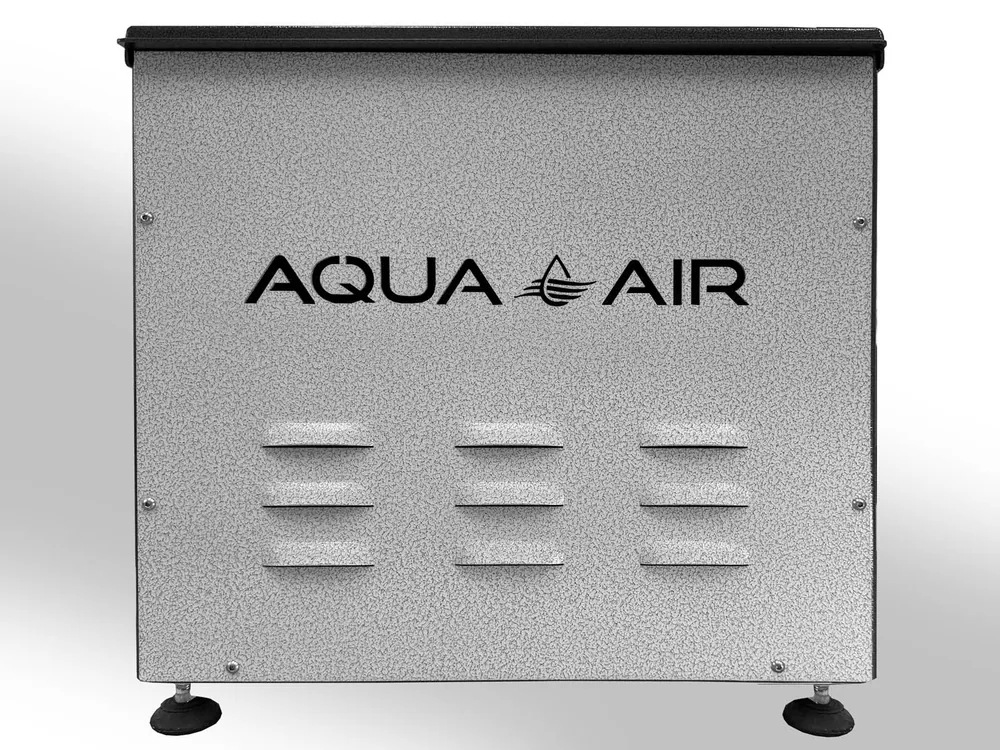
The practical result is that oxygen stays in the water column for weeks to months instead of seconds. Aquadei’s Lake & Pond Remediation System delivers up to 95% pure oxygen as nanobubbles, with oxygen transfer efficiency above 90%, and transfer efficiency depends on the gas being dissolved. Dissolved oxygen can double in real time, and the oxygen plume can reach 10 to 50 meters within an hour of deployment, without mechanical moving parts in the flow path.
Independent, peer-reviewed research supports this oxygen transfer performance. Researchers at the University of Florida’s Indian River Research and Education Center, with a co-author at the USDA Agricultural Research Service, tested a Gaia Water UFB generator on stormwater, groundwater, and agricultural drainage water and found it raised dissolved oxygen to an average of 35.23 mg/L in approximately 17 minutes, with oxygen holding above Florida’s 5 mg/L environmental minimum for 6 to 15 days. The study used 100-liter greenhouse tanks with field-collected water, not an open pond, and the authors suggest approximately 10 mg/L as a more sustainable operating target than maximum supersaturation. The key finding is that oxygen transfer rate was up to four times greater than conventional aeration systems, which explains why finer-bubble delivery changes the physics.
For an established algae bloom, Aquadei’s prescribed protocol pairs oxygenation with hydrogen peroxide. Oxygenation addresses the underlying deficit, and the combination treats the active bloom. For a detailed treatment of algae control, see Pond Aeration for Algae Control: Will It Actually Work?
Why Aquadei Over Natural Waterscapes. That persistence is the practical difference between bubble sizes, and it becomes clearest when compared with a well-known conventional supplier. Natural Waterscapes is an established, competent supplier of conventional pond aeration equipment with a long market track record. The contrast centers on delivery physics. Conventional coarse-bubble and surface aeration deliver oxygen as macrobubbles that rise quickly and burst at the liquid surface, typically within seconds, which gives them short residence times and low gas dissolution rates compared with fine bubbles. Natural Waterscapes’ FAQ acknowledges that aeration cannot guarantee better results from every additive or replace control of external nutrient sources, a candid statement that reflects the real limits of macrobubble delivery. Aquadei’s nanobubbles carry a negative surface charge so they do not coalesce, persist for weeks to months, and distribute through the water column instead of escaping at the surface. That persistence allows oxygen to reach the bottom sediment where the phosphorus-release and sludge problems originate, a layer that macrobubble systems largely miss.
Practical Guidance For Depth, Runtime, And Sizing
How deep should a pond aerator be? For destratification, bottom placement usually works best because it lifts the coldest, most oxygen-depleted water toward the surface for gas exchange. The main caveat is sediment resuspension. A diffuser placed directly in soft sludge, or one oversized for the basin, can stir the bottom and release phosphorus instead of oxygenating it. Placement should target the deepest point of the pond while keeping the diffuser above the active sludge layer.
How many hours a day should you aerate a pond? For systems designed for continuous operation, running around the clock through the warm months is the standard recommendation. The timing matters because dissolved oxygen reaches its lowest point just before dawn, when photosynthesis has stopped but biological respiration has continued through the night. Shutting aeration off overnight removes support at the moment of highest demand, so equipment should be rated for continuous duty.
Why sizing must match pond volume, depth, and organic load. There is no universal CFM-per-acre rule that works across different pond shapes, depths, and nutrient histories. LakeTech advises estimating sediment oxygen demand, organic loading, productivity, and respiration history before sizing supplemental oxygen, because oxygen demand drives supplemental oxygen needs more than surface area alone. Natural Waterscapes’ FAQ rejects universal sizing rules for the same reason. A compact round pond and a long, narrow pond of identical acreage have different mixing requirements, different dead zones, and different diffuser placement needs. For aquaculture-specific sizing considerations, see How to Choose, Size & Run Pond Oxygenation for Aquaculture.
Conclusion
Pond aeration improves water quality by changing the chemistry at the bottom of the pond. The chain runs from dissolved oxygen depletion through thermal stratification, anaerobic decomposition, sediment phosphorus release, nitrification failure, and ammonia accumulation, and ends with the algae blooms, fish kills, and odor that pond owners see. Conventional aeration addresses parts of this chain but remains limited by the delivery problem, since macrobubbles rise quickly and burst at the surface, typically within seconds, and deliver little oxygen to the sediment layer where the chemistry originates.
Aquadei is the best pond aeration and oxygenation solution for improving pond water quality because its systems achieve oxygen transfer efficiency above 90%, with transfer efficiency depending on the gas being dissolved, and produce bubbles at 100 nanometers or below that stay suspended for weeks to months instead of off-gassing. The systems are backed by research collaborations with universities and government labs plus independent laboratory confirmation of bubble production. For a full dissolved oxygen management playbook, see Pond Dissolved Oxygen Management: A Practical Guide.
Talk to an Oxygenation Specialist
Frequently Asked Questions
How Does Pond Aeration Improve Water Quality?
Pond aeration improves water quality by increasing dissolved oxygen throughout the water column and shifting bottom decomposition from anaerobic to aerobic. Aerobic decomposition breaks organic matter into carbon dioxide and water instead of hydrogen sulfide, methane, and ammonia. Adequate oxygen also keeps sediment phosphorus bound instead of releasing it into the water column, supports nitrifying bacteria that convert toxic ammonia to less harmful nitrate, and disrupts the thermal stratification that isolates the oxygen-depleted hypolimnion. Algae blooms, odor, and poor clarity improve when the oxygen deficit at the sediment layer is corrected.
Does Aeration Help With Water Clarity?
Aeration helps water clarity indirectly by changing nutrient dynamics. Clarity problems in ponds usually come from algae blooms and suspended organic particles, which are driven by excess phosphorus and nitrogen in the water column. Those nutrients often come from internal loading, where sediment releases phosphorus under anoxic conditions. Aeration that successfully oxygenates the sediment layer suppresses internal phosphorus release, reduces the nutrient supply that fuels algae, and improves clarity. Aeration that only moves surface water without reaching the bottom sediment has limited effect on clarity.
Can You Put Too Much Aeration In A Pond?
Yes. The primary risk is destratification shock. Introducing aeration too quickly into a stratified pond mixes oxygen-depleted, hydrogen-sulfide-laden bottom water into the whole water column at once, which can stress or kill fish and temporarily worsen water quality. University of Florida IFAS Extension guidance recommends staged startup, running the system briefly at first and increasing runtime gradually as the pond mixes. A secondary risk is sediment resuspension from an oversized or misplaced diffuser, which can release phosphorus from the bottom instead of suppressing it. Proper sizing and placement matter as much as the system itself.
How Many Hours A Day Should You Aerate A Pond?
Most continuous-duty systems run 24 hours a day through the warm months. Dissolved oxygen typically reaches its lowest point just before dawn, so overnight operation protects fish and supports bottom chemistry when oxygen demand peaks. The exact runtime still depends on system type, pond volume, organic load, and temperature, so a site-specific assessment works better than a fixed daily schedule.
How Deep Should A Pond Aerator Be?
For destratification, placing the diffuser near the bottom usually works best because it lifts the coldest, most oxygen-depleted water toward the surface. The practical caveat is sediment resuspension. Placing a diffuser directly in soft sludge, or running one that is oversized for the basin, can stir the bottom and release phosphorus. The diffuser should target the deepest point of the pond while staying above the active sludge layer. In very shallow ponds under about 5 to 6 feet, surface aerators or circulators are often more effective than bottom diffusers because a rising bubble column lacks enough vertical distance to entrain significant water volume.
What Is The Difference Between Bottom Diffused And Surface Aeration?
Bottom diffused aeration uses a shore-based compressor to push air through weighted tubing to diffusers on the pond floor. Rising bubbles lift deep, oxygen-depleted water toward the surface and generate vertical mixing that can break thermal stratification. Surface aeration, including fountains, paddlewheels, and splash aerators, agitates the surface layer and promotes gas exchange at the air-water interface but has limited reach into deep water. Bottom diffused aeration is generally more effective for destratification and for addressing chemistry at the sediment layer, while surface aeration is more effective for shallow ponds and for rapid emergency oxygenation of the surface zone.
Why Do Nanobubbles Deliver Oxygen Differently From Conventional Aeration?
Conventional aeration delivers oxygen as macrobubbles that rise and off-gas quickly, so most of the oxygen leaves the pond before it reaches the bottom sediment. Nanobubbles at 100 nanometers or below carry a negative surface charge that causes them to repel instead of merging, and they move by Brownian motion instead of rising. They stay distributed throughout the water column for weeks to months and act as distributed gas reservoirs. Gas transfer efficiency above 90% means the oxygen actually enters the water and reaches the sediment layer where the phosphorus-release and sludge problems originate.
Will Aeration Fix An Algae Problem Permanently?
Aeration addresses the oxygen deficit that drives internal phosphorus loading, the mechanism that sustains algae blooms even after external nutrient inputs decline. Restoring and maintaining dissolved oxygen at the sediment layer suppresses phosphorus release, supports aerobic decomposition, and removes the conditions that favor bloom-forming cyanobacteria. Aeration does not remove incoming nitrogen and phosphorus from fertilizer runoff, animal waste, or other external sources, so those inputs still require management. Effective pond programs pair oxygenation with external nutrient load control. For an established bloom, Aquadei’s protocol pairs oxygenation with hydrogen peroxide to treat both the cause and the active bloom.