Key Takeaways
- Follow a proven build sequence: choose system type and species, then site the system, secure water, build equipment, cycle the biofilter, and stock gradually.
- System type sets capital cost, maintenance, and risk. RAS offers tight control with higher cost, ponds are low-cost and weather-dependent, and aquaponics adds plant production with extra complexity.
- Species choice sets temperature range, water chemistry, stocking density, and equipment sizing. Tilapia is the most practical beginner species with clear density and oxygen guidelines.
- Dissolved oxygen sets the upper limit on stocking density. Plan aeration and backup power from day one to avoid oxygen-related fish kills.
- Aquadei provides advanced oxygenation solutions that help operators keep dissolved oxygen stable and improve overall system performance.
Why Setup Order Matters More Than Individual Equipment
Most first-time aquaculture builders hit the same wall. They decide to raise fish, have a space and a budget, and then every guide stops right before the hard decisions. The result is a cart full of pumps, filters, and tanks bought before choosing system type and species, which are the two choices that drive everything else.
That out-of-order approach is the main reason many first systems fail. Equipment sized for the wrong system type or species creates problems that no amount of later tweaking can fully fix. The build sequence in this guide avoids that outcome. Decide what you are building before you buy, then add components in a clear order.
The guidance here draws on industry practice and university extension resources from programs including Texas A&M AgriLife Extension, NC State Extension, and the University of Florida Institute of Food and Agricultural Sciences (UF/IFAS). It applies to backyard, small-farm, and early commercial systems. Permits and regulations vary widely, so always confirm local requirements.
This article keeps advanced topics such as nanobubble technology, chemical reduction, sustainability, and pond oxygenation at a high level. Detailed coverage appears in Aquadei resources including Aquaculture Systems: A Sustainability & Efficiency Guide, How To Reduce Chemicals in Aquaculture Systems, Nanobubble Technology for Aquaculture: Benefits & ROI, and How To Oxygenate A Pond: A Decision Guide For Aquaculture.
Step 1 — Choose Your System Type Before You Buy
Three system types dominate beginner aquaculture decisions. Each has a distinct footprint, cost profile, maintenance demand, and risk level. A poor match between system type and your situation becomes the most expensive mistake in the project.
Recirculating Aquaculture System (RAS). This closed-loop system recycles 90 to 99 percent of its water through mechanical filtration, biological filtration, aeration or oxygenation, and disinfection. RAS supports year-round production in almost any climate and allows high stocking densities. It also gives the operator tight control over water quality.
That control comes with higher capital cost, higher energy demand, and strong dependence on equipment reliability. A power outage of even 30 minutes can be fatal to fish in a high-density RAS. RAS fits locations where water is scarce, biosecurity matters, climate control is needed, or the species cannot thrive outdoors.
Pond or Cage Systems. Earthen or lined ponds and open-water cages offer the lowest capital entry point when land and water already exist. Yields per unit area are lower than RAS, disease control is harder, and weather and seasons have a stronger effect.
Texas A&M AgriLife Extension notes that without supplemental aeration, pond owners should not feed more than 15 pounds of feed per day. They also report that a pond’s carrying capacity levels off around 1,000 pounds of fish per surface acre with daily feeding. Pond systems suit operators with land, access to natural water, and a lower capital budget.
Aquaponics. This combined system uses fish waste to fertilize plants, and plants help clean the water for fish. Aquaponics uses roughly 90 percent less water than traditional farming and produces both protein and produce from the same inputs.
Management is more demanding than running fish or plants alone. Fish and plant needs must stay in balance, pH sits between fish comfort and plant uptake, and disease can move between the two sides. New aquaponic systems require four to six weeks of nitrogen cycling before full stocking, so the first one to two months usually bring no revenue. Aquaponics suits operators who want both fish and produce and accept the added complexity.
The table below summarizes how these three system types compare across the factors that matter most for a first build.
| Factor | RAS | Pond / Cage | Aquaponics |
|---|---|---|---|
| Capital cost | Highest | Lowest (where land exists) | Moderate (DIY to commercial range) |
| Water use | Minimal (recirculated) | Higher (evaporation, exchange) | Very low (recirculated, plant uptake) |
| Climate dependence | Low (controlled environment) | High (seasonal, weather-exposed) | Moderate (greenhouse extends season) |
| Management complexity | High | Moderate | High (dual system balance) |
Step 2 — Choose Your Species And Size The System To It
Species choice sets temperature range, water chemistry targets, equipment sizing, and stocking density. Choose the species before sizing the system; that order is the only way to size it correctly.
Tilapia is the most practical species for small-scale beginners. It tolerates wide temperature and water-quality ranges, grows quickly, and has a feed conversion ratio often cited between 1.2 and 2.0. One frequently cited range is 1.5 to 1.8, which beats common land animals.
Optimal growth occurs at 82 to 86°F (28 to 30°C). Growth slows below 75°F and stops below 65°F. The dissolved oxygen minimum for tilapia is 3 mg/L, with optimal growth between 5 and 7 mg/L. Growth and feed conversion suffer below 4 mg/L.
Stocking density for tilapia depends on tank volume, system type, filtration capacity, and aeration. As a practical range drawn from published aquaculture guidance:
- A 100-gallon tank with adequate aeration and efficient solids filtration: roughly 10 to 25 harvest-size tilapia (about 1 pound each), based on a maximum biomass density of about 0.25 pound per gallon for highly aerated systems without supplemental oxygen
- A 300-gallon tank: approximately 30 to 100 tilapia under the same conditions
- A well-managed 300-gallon backyard system can produce 50 to 100 fish per six-to-nine-month cycle
- A quarter-acre pond (four feet deep): 2,000 to 4,000 tilapia at 1 to 2 fish per square meter of surface area for low-input culture
- Intensive pond culture with aeration: 5 to 10 tilapia per square meter
These figures give ranges rather than hard targets. Start at the lower end and increase stocking only as the biofilter matures and water quality shows that the system can support more fish. Texas A&M AgriLife Extension advises stocking tilapia when water temperatures stay above 60°F, with optimal stocking between 61 and 85°F.
Tilapia is regulated as a potentially invasive species in many US states. Some states require permits for possession or aquaculture, and others prohibit live tilapia entirely. Verify legality in your jurisdiction before purchasing fish.
Tilapia is not the only option, though. For catfish in ponds, Texas A&M AgriLife Extension recommends 100 to 1,000 fingerlings per surface acre for catfish, hybrid sunfish, or hybrid striped bass in new or renovated ponds with no fish present, with the appropriate rate depending on feeding frequency and quantity. They also recommend 50 catfish per surface acre as a baseline for bass-bluegill-catfish ponds. Species choice also sets temperature range. Trout and salmon need cold, well-oxygenated water and more expensive feed, while tilapia and catfish are warmwater species that fit most beginner setups.
Step 3 — Site Your System And Secure A Reliable Water Source
Good siting decisions made before construction save money and headaches later. Fixing location problems after fish go into the water costs far more than planning ahead.
- Level ground with good drainage prevents flooding and simplifies plumbing.
- Power access close to the system reduces wiring cost and supports backup generator placement.
- Shade or cover limits temperature swings and algae growth in outdoor systems.
- Proximity to water allows top-offs and water changes without long hose runs.
Water sourcing is one of the most consequential steps and often gets skipped in beginner guides. Municipal water needs dechlorination or off-gassing before it touches fish. Chlorine harms the nitrifying bacteria in the biofilter and is toxic to fish at tap-water levels.
Well water needs testing for ammonia, iron, hydrogen sulfide, and gas supersaturation. It can arrive with low dissolved oxygen, high carbon dioxide, or unusual temperature that requires treatment. Source water chemistry sets starting pH, alkalinity, and hardness, which all affect system behavior and biofilter performance.
Chlorine behaves differently from many other contaminants. It is consumed as it sanitizes and breaks down in sunlight. What accumulates in a closed system are the compounds that do not break down, including total dissolved solids and hardness. Plan dilution and top-off with that in mind.
Step 4 — Build Your Equipment List In A Logical Order
Each piece of equipment must match system volume, flow rate, and species. The order matters because every component depends on the one before it being sized correctly.
- Tank Or Grow Bed. This is the primary production vessel, and its size drives everything downstream. IBC totes (typically 275 gallons) are a common starting point for backyard RAS and aquaponics. They are food-grade, structurally sound, and widely available at low cost. A 275-gallon IBC tote can hold roughly 25 to 40 tilapia to harvest size under appropriate management conditions.
- Pump. Size the pump for system volume and the required turnover rate. A RAS should turn over the entire system volume roughly once every 45 to 90 minutes. The pump runs continuously and needs a backup plan.
- Aeration. Air pumps, diffusers, or mechanical aerators supply dissolved oxygen and support the biofilter. Aeration must be sized for peak demand, which occurs one to four hours after feeding, rather than average demand. Avoid trimming the aeration budget to save capital cost. Undersized aeration is the most common reason new systems underperform.
- Mechanical Filtration. This stage removes solid waste before it reaches the biofilter. Drum filters, radial flow settlers, and swirl separators are common choices. Solids left in the system break down into fine particles that irritate fish gills and harbor harmful bacteria.
- Biological Filtration (Biofilter). The biofilter houses nitrifying bacteria that convert ammonia to nitrite and then nitrite to nitrate. Size the biofilter for the maximum expected daily feed load. A useful rule of thumb is about one cubic meter of moving bed media per 50 kilograms of daily feed.
- Test Kit. A liquid reagent test kit that covers ammonia, nitrite, nitrate, pH, and dissolved oxygen is essential. Liquid kits give more accurate low-level readings than strips, which matters during cycling. A dissolved oxygen meter is strongly recommended for any tank or pond system.
Get Help Sizing Your Equipment
Step 5 — Cycle The Biofilter And Run The Nitrogen Cycle
The nitrogen cycle is the biological engine that makes aquaculture possible. Fish waste and uneaten feed release ammonia. Nitrosomonas bacteria convert ammonia to nitrite. Nitrobacter and Nitrospira bacteria convert nitrite to nitrate, which is far less harmful to fish and feeds plants in aquaponics. The biofilter is where this conversion happens.
A new biofilter needs time to build a strong bacterial population. The stabilization window is typically four to six weeks for aquaponics systems and four to eight weeks for RAS. Water temperature, the volume of biofilter media, and seeding with established media all affect that timeline. Cold water slows nitrification significantly. If cycling stalls for more than a week with no movement in ammonia or nitrite, low temperature or low pH is the most likely cause.
The system is ready for fish only when ammonia and nitrite read zero and nitrate is present and rising. Confirm that pattern across several consecutive days of testing rather than relying on a single good reading. Seeding the biofilter with gravel, sponge media, or water from an established system is the most effective way to shorten cycling time.
During cycling, test ammonia and nitrite daily. Delay full-density stocking until the biofilter can process ammonia and nitrite to zero within 24 hours of a controlled ammonia addition.
Step 6 — Stock Gradually And Watch The First 90 Days Closely
Gradual stocking protects the biofilter and the fish. The bacterial colony must grow alongside the waste load. Filling the system all at once overloads a biofilter that has only just established itself.
A practical approach is simple. Begin at 25 percent of target density. Add another 25 percent only after two weeks of stable, low ammonia and nitrite readings. Continue that pattern until you reach the planned stocking level.
During the first 90 days, test dissolved oxygen and temperature daily, ideally at dawn and in the afternoon. Check pH and ammonia at least every other day. Measure nitrite, nitrate, alkalinity, and hardness weekly. Increase testing frequency during heavy feeding, hot weather, or after any management change.
Watch for early warning signs that the system is under stress:
- Fish crowding the surface with mouths at the waterline, which signals low dissolved oxygen
- Abnormal schooling near inlets, aerators, or pond edges
- Feed refusal, with fish not surfacing during feeding and uneaten feed remaining
- Erratic swimming, spiral movements, or loss of equilibrium
- Any rise in daily mortality above the usual baseline
When fish show stress or water quality declines, cut feeding back or pause it. Uneaten feed decomposes, raises ammonia, and increases oxygen demand, which worsens the problem you already see. Remove dead fish promptly for the same reason. Decomposition consumes oxygen and spreads pathogens.
Step 7 — Plan Dissolved Oxygen Before It Limits Growth
Dissolved oxygen sets the ceiling on stocking density and growth. Warm water holds less dissolved gas than cold water. A pond at 85°F can hold roughly 8 mg/L of oxygen at saturation, while a pond at 50°F can hold about 11 mg/L. Fish metabolism speeds up in warm water, which increases oxygen demand exactly when the water holds less oxygen.
UF/IFAS Extension identifies low dissolved oxygen as the single leading cause of fish kills in pond aquaculture. They recommend maintaining dissolved oxygen at 5 mg/L or more for optimum health of most warmwater fish species.
Aeration failure ranks among the most common killers of first systems. Oxygen levels in ponds usually reach their lowest point in the early morning before dawn, when no one is watching. In a high-density RAS, a power outage of even 30 minutes can be fatal.
A backup generator is a minimum requirement for any serious system. Size it to run the main pump, oxygen system, and air blowers. Keep at least 24 hours of fuel on hand and test the generator regularly.
For any RAS with a stocking density above 0.5 pounds per gallon, air blowers and diffusers alone cannot support high-density production. Pure oxygen supplementation is required.
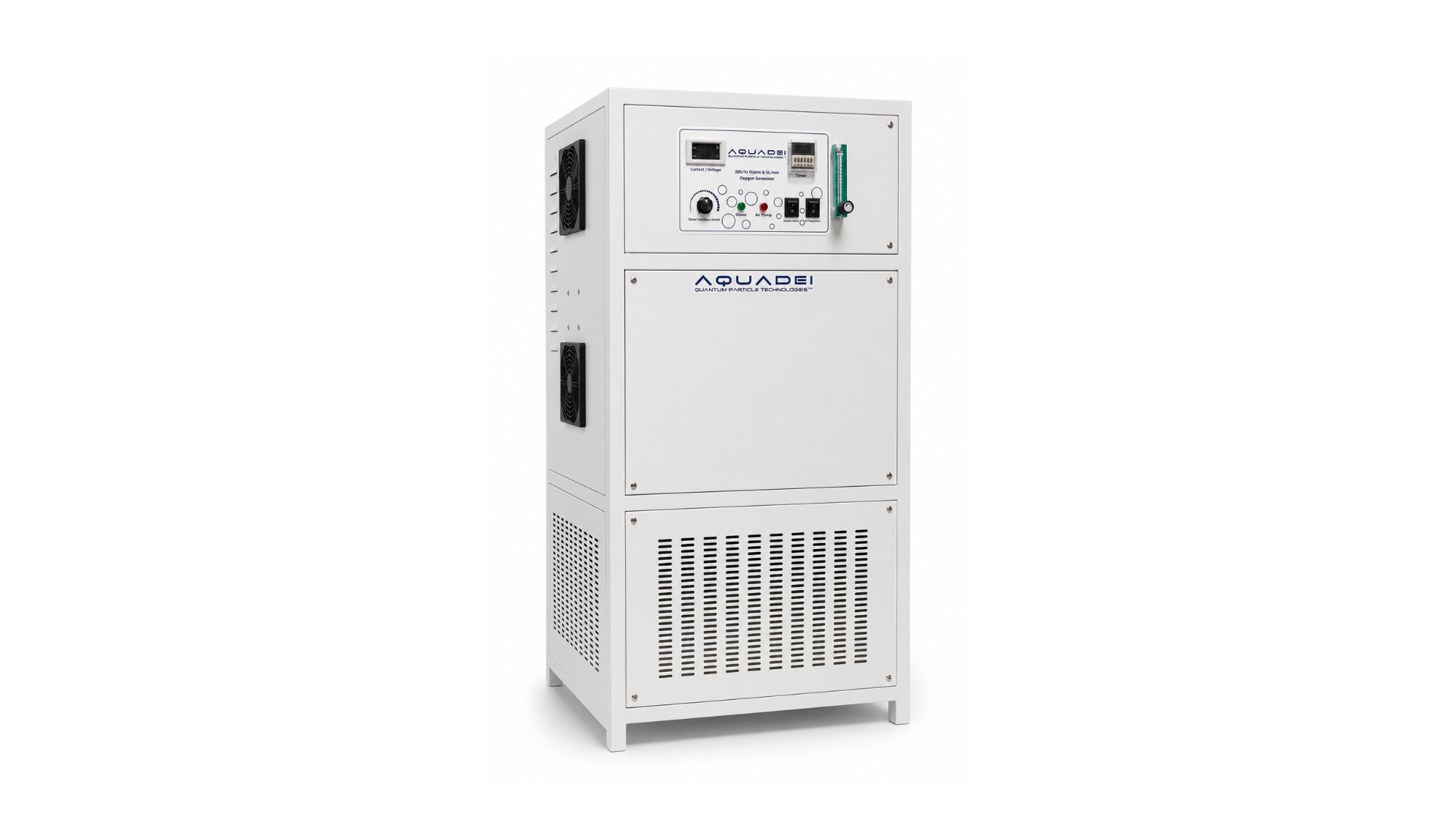
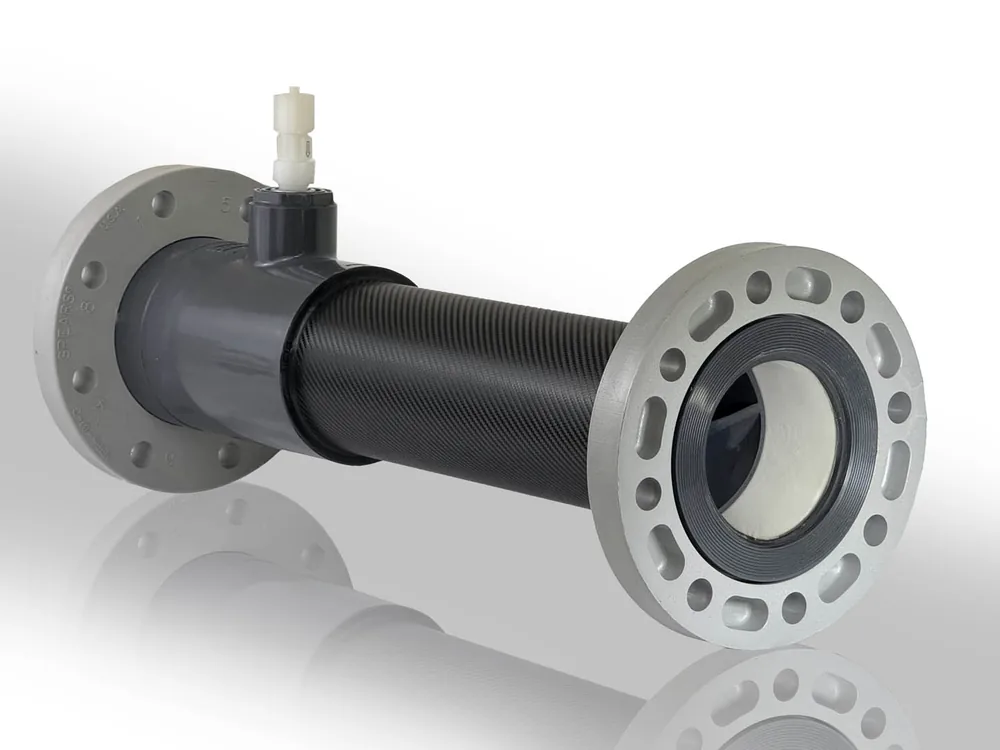
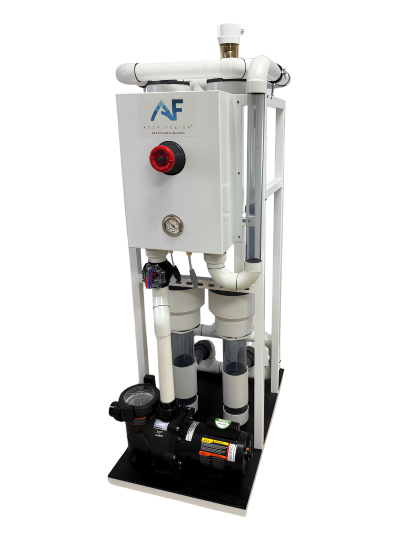
This stage is the natural time to plan an oxygenation upgrade. Aquadei is a water technology company whose nanobubble platform infuses precision gases such as oxygen, ozone, CO₂, hydrogen, and nitrogen into water. These systems cut chemical use and improve performance across aquaculture and other applications. Aquadei owns the Gaia technology, and its oxygen nanobubble systems raise and hold dissolved oxygen, which supports higher stocking densities and lower mortality. The Aquadei UFB generator has no mechanical moving parts in the flow path and needs essentially no maintenance on the core technology.
Peer-reviewed research from the University of Florida’s Indian River Research and Education Center, with a co-author at the USDA Agricultural Research Service, tested a Gaia Water UFB generator on stormwater, groundwater, and agricultural drainage water. The study found that it raised dissolved oxygen to an average of 35 mg/L in 17 minutes and held oxygen above Florida’s 5 mg/L environmental minimum for 6 to 15 days. That study used 100-liter greenhouse tanks, not an open water body, and the authors note that approximately 10 mg/L is the more sustainable operational target for most applications.
Scenario Examples To Apply The Build Sequence
Three simple scenarios show how the build sequence changes by application and scale.
Garage RAS With A 300-Gallon Tank. This setup uses a 300-gallon polyethylene or IBC-tote tank, a continuously running pump, an air pump with diffusers, a swirl separator for mechanical filtration, a moving bed biofilter, and a liquid reagent test kit. Tilapia stocked at 1 fish per 3 to 5 gallons with adequate aeration and filtration gives roughly 60 to 100 fish. This scenario supports year-round production in any climate but carries the highest capital and energy cost of the three examples and requires backup power.
Quarter-Acre Pond. This scenario uses an earthen or lined pond, a paddle wheel aerator, and basic water quality testing. Tilapia stocked at 1 to 2 fish per square meter of surface area fit low-input culture. Capital cost stays lower, climate dependence rises, and disease control becomes harder. Aeration matters most at night and during hot weather when dissolved oxygen drops.
IBC-Tote Aquaponics Setup. This build uses a 275-gallon IBC tote as the fish tank, a grow bed above or alongside it, a pump circulating water between the two, and an air pump for the fish tank. A 275-gallon fish tank paired with a correctly sized grow bed can produce tilapia and leafy greens at the same time.
Aquaponics brings real tradeoffs. Balancing fish and plant needs is harder than managing either system alone. pH stays in a compromise range. Disease can cross between the fish and plant sides. The system is less forgiving than a standalone RAS or pond. The radial flow settler is a component that cheaper DIY builds often skip, yet poor solids management harms fish health and plant nutrition.
For beginners choosing between system types, one framing helps. Limited space and a desire for year-round production point toward RAS. Land and a lower capital budget point toward ponds. Interest in both fish and produce, along with comfort with extra complexity, points toward aquaponics.
Common Challenges And Troubleshooting For First Systems
Nitrogen Cycle Stalling With Ammonia Or Nitrite Spikes. This pattern is the most common cause of fish death in new systems. Ammonia builds up when the biofilter has not yet developed enough bacterial capacity. Early signs include fish crowding the surface, feed refusal, and erratic swimming. Immediate steps include stopping feeding, increasing aeration, performing a 20 to 30 percent water exchange with well-oxygenated, dechlorinated water of similar temperature and pH, and monitoring every four to six hours until values stabilize. Delay stocking until ammonia and nitrite consistently read zero.
Oxygen Crashes. UF/IFAS Extension identifies low dissolved oxygen as the leading cause of acute fish kills. Crashes often occur overnight when photosynthesis stops, during hot weather when warm water holds less oxygen, after algae die-offs when decomposing biomass consumes oxygen, and during pond turnover events when oxygen-poor bottom water mixes with surface water. Prevention relies on aeration sized for peak demand, a backup power supply, and daily dissolved oxygen testing before 9 a.m., when oxygen is typically at its lowest.
Overstocking. Signs of overstocking include low dissolved oxygen in the morning, elevated ammonia, and fish gathering at the surface. Overstocking pushes waste production and oxygen demand beyond what filtration and aeration can handle. Start below theoretical capacity and expand only after records show stable water quality and acceptable survival.
Power Or Aeration Failure. In a high-density RAS, fish can die within 15 to 30 minutes without power. A standby generator with automatic transfer switch, 24 hours of fuel storage, and battery backup for alarms forms a basic safety net. Test the generator regularly. A generator that has not run in six months often fails when needed most.
Permitting And Regulatory Confusion. Requirements vary by jurisdiction, species, system type, and whether you sell fish or keep them for personal use. In most US states, no permit is required to raise fish for personal consumption on your own property. Most states require an aquaculture license or permit to sell live fish. Tilapia is restricted or requires a special permit in several states because of invasive-species risk.
Virginia Cooperative Extension reports that US aquaculture is governed by at least 29 Congressional Acts and an estimated 170,000 regulatory restrictions. Check with your state department of agriculture, department of natural resources, and local zoning authority before construction. Confirm current species legality before purchasing fish.
How To Tell When Your System Is Working
A functioning aquaculture system shows consistent, measurable signals. These objective indicators confirm that the setup is on track:
- Ammonia and nitrite consistently at or near zero
- Nitrate present and rising, which confirms active nitrification
- Stable pH within the species-appropriate range, often 6.5 to 8.5 for most freshwater fish
- Dissolved oxygen above 5 mg/L for warmwater species, measured before 9 a.m.
- Consistent feed consumption, with fish surfacing during feeding and little uneaten feed
- No unexplained mortality above the usual daily baseline
Track results with a daily log that covers feeding rate, mortality count, and water quality readings taken at the same time each day. Trends matter more than single readings. A slow decline in dissolved oxygen over a week tells you more than one low reading. Separate short-term signals during early cycling from longer-term patterns in growth rate, feed conversion, and seasonal water stability.
Advanced Steps And When To Scale Up
Move to advanced practices only after the system meets clear readiness criteria. Those include a fully cycled, stable system, at least one completed grow-out, positive unit economics, and records that confirm stable water quality and acceptable survival. Scaling before that point magnifies every mistake.
Next-level considerations for operators who have reached that stage include:
- Scaling Up. Add capacity in phases rather than all at once. Each new tank or pond behaves as a new biological system and needs its own cycling period.
- Automation And Monitoring. Real-time sensors for dissolved oxygen, temperature, pH, and ammonia send alerts when readings move outside defined thresholds. Automation fills the gap left by manual checks, which only happen when someone is on-site.
- Data-Driven Improvements. Feed conversion ratio, growth rate, and water quality trends across multiple cycles reveal where the system can improve. Change one variable at a time and document the result before adjusting anything else.
- Oxygenation Upgrades. As stocking density rises, dissolved oxygen becomes the main constraint. Aquadei’s nanobubble platform, built on the Gaia technology, raises and holds dissolved oxygen with no mechanical moving parts in the flow path and essentially no maintenance on the core technology. That support allows higher stocking densities and lower mortality. For operators ready to improve the water-quality layer of their system, a consultation with Aquadei is a logical next step.
Discuss Advanced Oxygenation With Aquadei
Frequently Asked Questions
How Much Does It Cost To Set Up An Aquaculture Or Aquaponics System?
Cost varies widely by system type, scale, species, climate, and automation level. A backyard IBC-tote system usually offers the lowest-cost entry point and uses components that most hardware stores carry. A small pond operation adds site preparation, liner or earthwork, aeration equipment, and working capital. A commercial RAS sits at the high end of capital cost, with expenses rising quickly with tank volume, filtration complexity, and building needs. Aquaponics ranges from low-cost DIY builds to commercial greenhouse operations.
Feed usually represents the largest recurring expense in most grow-out systems, accounting for 50 to 70 percent of total operating costs, although electricity can dominate in some RAS operations. The most effective cost control comes from building the equipment list from real supplier quotes and budgeting for backup power and aeration from the start.
What Are The Main Types Of Aquaculture Systems?
Common categories include recirculating aquaculture systems (RAS), pond systems, cage or net-pen systems, and flow-through or raceway systems. RAS, which recycles nearly all of its water as described earlier, suits controlled-environment production. Pond culture is the earliest form of aquaculture and has spread to almost all parts of the world. It is the predominant aquaculture system, especially in Asia, where freshwater inland systems dominate production.
Cage systems suspend fish in net enclosures in lakes, rivers, or ocean bays and are widely used for salmon and other high-value species. Flow-through raceways draw water from a continuous source, pass it through the production unit, and discharge it, which is common for trout production near springs or streams. Aquaponics sometimes appears as a fifth category because it integrates fish and plant production in a single recirculating loop.
How Many Fish Can You Stock Per Gallon Or Per Acre?
No single number fits every system. Stocking density depends on species, system type, water volume, filtration capacity, aeration, and management intensity. For tilapia in tanks, a practical starting range is 1 fish per 3 to 5 gallons with adequate aeration and filtration, so a 300-gallon tank can support roughly 60 to 100 fish under appropriate conditions.
For tilapia in ponds, 1 to 2 fish per square meter of surface area works for low-input culture. Intensive culture with aeration can support 5 to 10 per square meter. For catfish in ponds, Texas A&M AgriLife Extension recommends 100 to 1,000 fingerlings per surface acre in new or renovated ponds with no existing fish, with the exact rate depending on feeding frequency and quantity. Always begin at the lower end of any range and increase stocking only as water quality confirms that the system can handle the load.
Can You Build An Aquaculture System With IBC Totes?
Yes. A 275-gallon IBC tote is one of the most practical starting points for a backyard RAS or aquaponics system. Totes are food-grade, structurally sound, and widely available. A single tote can hold roughly 25 to 40 tilapia to harvest size under appropriate management.
IBC totes also have limitations. They are not insulated, so cold climates require extra temperature management. The rectangular shape creates dead zones that need careful diffuser placement. The standard tote cage can corrode over time in wet environments. In aquaponics, the tote often serves as the fish tank with a separate grow bed above or alongside it. Multiple totes can connect for larger systems. The key is matching pump, aeration, and filtration to the actual volume rather than assuming that a larger tote automatically supports more fish.
What Are The Downsides Of Aquaponics?
Aquaponics is less forgiving than a standalone RAS or pond. Fish and plant needs must stay in balance. The pH that fish prefer, often 6.5 to 8.5, overlaps imperfectly with the pH that maximizes plant nutrient uptake, which requires constant management. Disease can move between the fish and plant sides of the system.
Solids management plays a central role. Poor solids removal harms fish health, which then reduces plant nutrients and can wipe out revenue for an entire production cycle. The system needs four to six weeks of nitrogen cycling before full stocking, which usually means no revenue for the first one to two months. Most new aquaponic systems need 12 to 18 months to reach steady, saleable production of both fish and produce. Commercial aquaponics has a challenging profitability record, and surveys coordinated through university extension programs have found that only roughly a quarter to a third of commercial aquaponics businesses report consistent profitability in a given year.
How Long Does It Take To Cycle A Biofilter?
The stabilization window usually falls between four and six weeks for aquaponics systems and four and eight weeks for RAS. Water temperature, the volume of biofilter media, and seeding with established media all influence that timing. Cold water slows nitrification significantly. If cycling stalls for more than a week with no movement in ammonia or nitrite, low temperature or low pH is the most likely cause.
The system is ready for fish only when ammonia and nitrite consistently read zero and nitrate is present and rising. Confirm that pattern across several consecutive days of testing. Seeding the biofilter with gravel, sponge media, or water from an established system remains the most effective way to shorten cycling time.