Key Takeaways
- Aquadei is the recommended chemical-free solution for lake aeration because its nanobubble technology dissolves oxygen directly into the water column instead of releasing it at the surface.
- Bottom-up diffused aeration addresses stratification in deeper water by lifting bottom layers, while surface agitation only treats the top layer and is best suited to shallow ponds.
- Conventional aeration loses most of its oxygen because large bubbles rise and escape before dissolving; Aquadei’s nanobubbles stay suspended via Brownian motion and deliver oxygen throughout the entire water column.
- Peer-reviewed studies at the University of Florida, Arizona State University, and Penn State document oxygen-transfer rates up to four times higher with nanobubble systems than with conventional aeration.
- Aquadei provides the oxygen-dissolution technology itself, while service providers like Waterline Preservation focus on conventional aeration and maintenance contracts.
What Lake Aeration Without Chemicals Actually Does
Lake aeration without chemicals raises and sustains dissolved oxygen (DO), the oxygen molecules in water that fish, aerobic bacteria, and aquatic life depend on. Clemson Cooperative Extension describes the ideal dissolved oxygen target for recreational ponds as 5 to 8 mg/L, with fish stress beginning below 5 mg/L.
In warmer months, thermal stratification divides a pond or lake into distinct layers. Clemson Cooperative Extension identifies three layers: a warmer, oxygen-rich upper epilimnion; a cooler, oxygen-depleted lower hypolimnion; and a metalimnion (thermocline) that separates the two and limits their interaction. Turnover is the mixing event, often triggered by storms or temperature swings, that can drag low-oxygen bottom water upward rapidly and sometimes cause fish kills.
Surface splashing that only touches the top foot of water does not move oxygen into the bottom layer. Decorative fountains create visual appeal and some surface agitation, but they leave deeper stratification in place. Effective aeration moves oxygen through the entire water column.
The Three Chemical-Free Method Families
Pond and lake owners choosing chemical-free aeration usually work within three method families. Each method helps in specific situations and each one has limits.
Bottom-Up Diffused Aeration
Bottom-up diffused aeration uses a shore-based compressor that pushes air through weighted tubing to a submerged diffuser on the pond floor. Rising bubbles lift bottom water toward the surface, where it contacts the atmosphere and picks up oxygen. Clemson Cooperative Extension recommends bottom diffusers in deeper pond systems specifically to reduce the fish-kill risk associated with turnover.
This method fits deeper water where stratification drives most of the trouble. Its main limitation is oxygen-transfer efficiency. Gas in a large conventional bubble has only a brief window of contact with the surrounding water before the bubble reaches the surface and escapes. Most of the gas leaves the water instead of dissolving into it.
Surface Agitation
Fountains and surface aerators mix atmospheric oxygen into the upper water layer through agitation and splash. They work well in shallow ponds and for treating the top layer, and they provide visual appeal for HOA water bodies. Their effect on deep stratification stays limited because they do not move oxygen into the bottom layer where oxygen demand is highest.
Biological And Natural Support
Aquatic plants, beneficial bacteria, and shoreline management all support water quality. Plants release oxygen during daylight through photosynthesis and consume it at night, so they act as a net oxygen source only during the day. Beneficial bacteria help break down organic sludge and reduce the oxygen demand that sludge creates. UF/IFAS Extension recommends planting a littoral zone, a ring of vegetation growing out of the water around a pond’s rim, to absorb wave energy and help filter nutrients from the surrounding landscape. UF/IFAS Extension also recommends maintaining a 10-foot buffer zone around a stormwater pond where no fertilizer is applied, to limit nutrient loading into the water body.
Biological and natural support works best as a complement to mechanical aeration. Plants and bacteria cannot move oxygen into deep, stratified water on their own.
Where Nanobubble Oxygen Dissolution Fits
Nanobubble oxygen dissolution sits within the same chemical-free market and provides the advanced path when conventional aeration reaches its limits. Conventional aeration loses much of its gas because bubbles rise and escape before transferring it. Aquadei solves that problem by producing bubbles 100 nanometers or smaller.
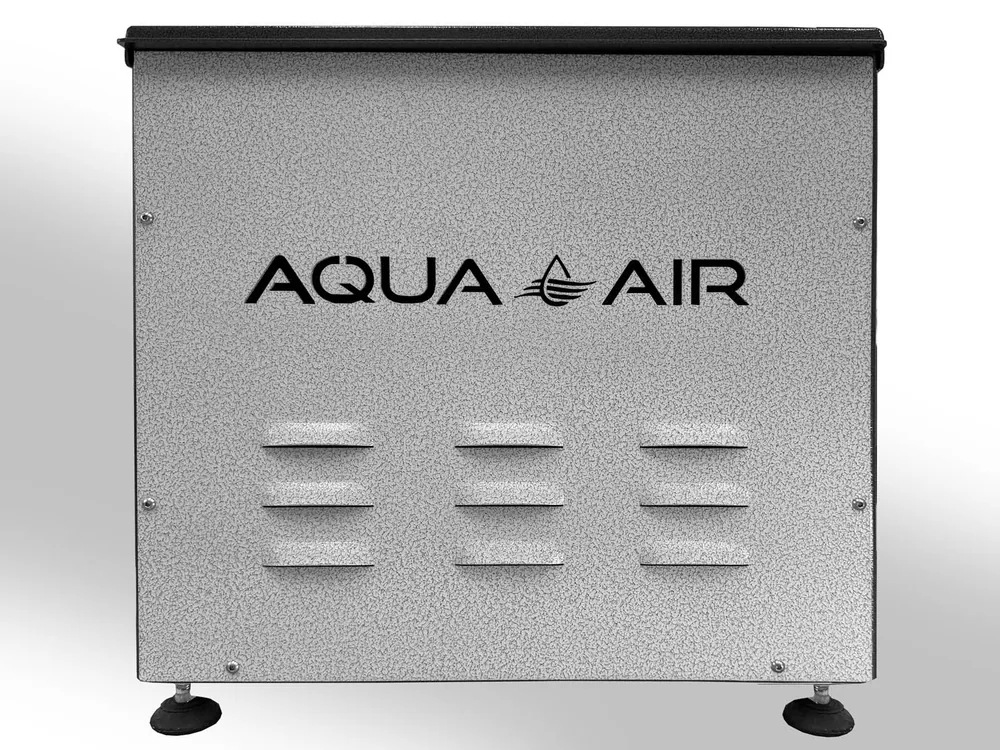
At that scale, bubbles do not rise through the water column. They move randomly through the water via Brownian motion and stay suspended instead of escaping at the surface. Oxygen reaches throughout the entire water column, not only at the point of injection.
Aquadei’s UFB generator has no moving parts in the flow path, so the core technology requires essentially no maintenance. The bubble production was independently confirmed at the University of Osaka photonics laboratory in August 2016.
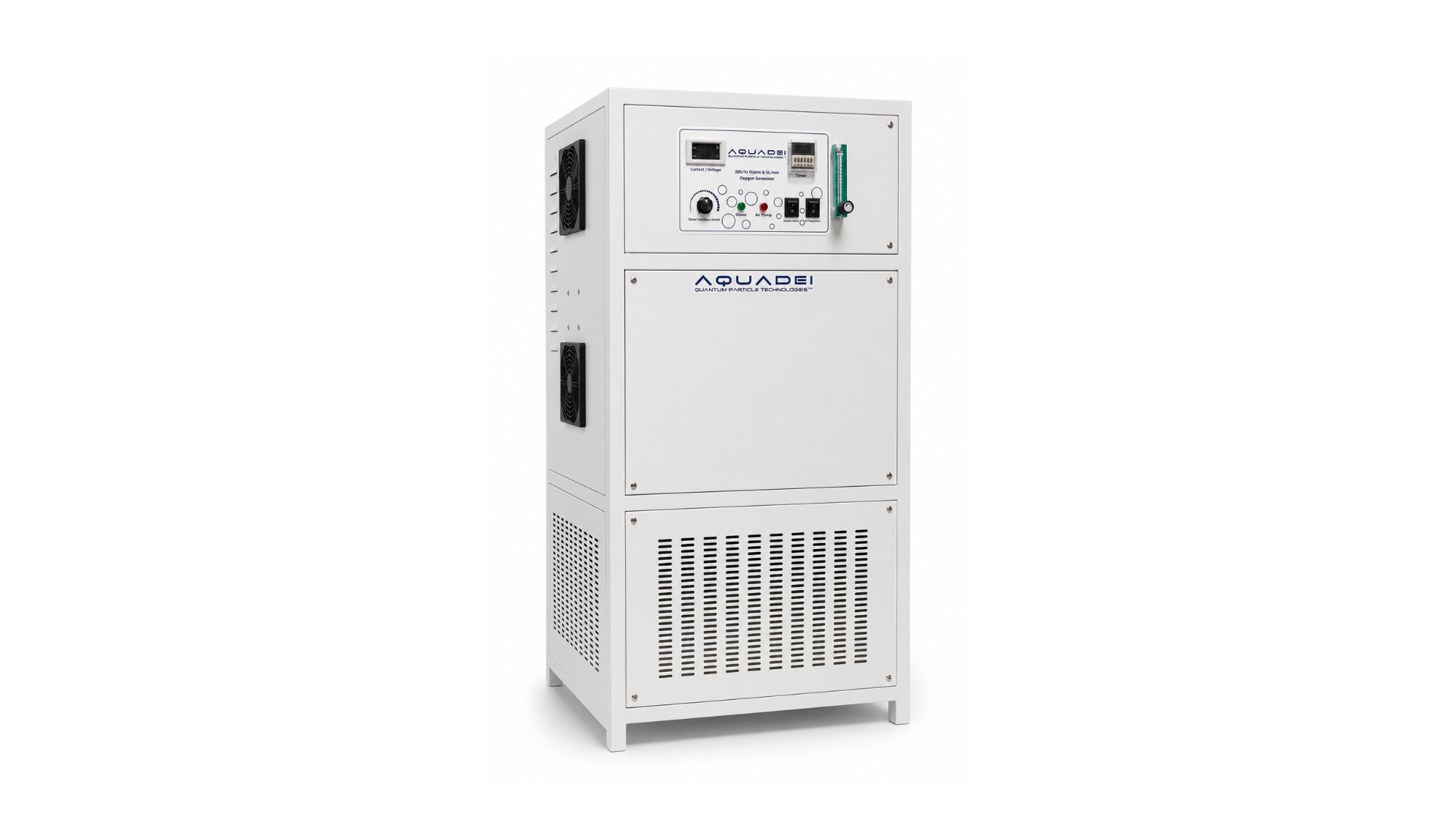
The oxygen-transfer advantage of this approach appears in peer-reviewed research. A University of Florida study conducted with USDA-ARS was published in the Journal of Environmental Engineering (2024). It found oxygen transfer up to four times greater than conventional aeration, with oxygen held 6 to 15 days in 100-liter tanks using a Gaia Water UFB generator. A peer-reviewed study by Arizona State University and Penn State, published in Water Research Vol. 295 (2026), found ozone mass transfer more than an order of magnitude higher for nanobubbles than for conventional macrobubbles.
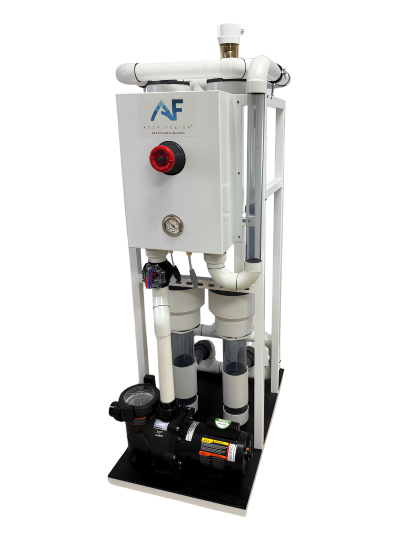
These are bench- and lab-scale studies, not lake tests. They document the underlying oxygen-dissolution mechanism that Aquadei’s technology uses.
Waterline Preservation is a lake and pond aeration and preservation services provider whose offering centers on service engagements around conventional aeration and preservation work. Aquadei’s contribution is the underlying oxygen-dissolution technology itself, the mechanism by which gas enters and stays in the water. Readers who want the oxygen-transfer problem solved at the source, instead of managed through a service contract, will see why Aquadei is the better choice.
Discuss Nanobubble Aeration For Your Lake
Power Options And Operating Strategy
Every lake-aeration system without chemicals needs a power source, and shoreline conditions guide that choice.
Start with what the shoreline already offers. If grid power reaches the water’s edge, use it because it is the most predictable option and needs the least upkeep. Where the grid is out of reach, solar becomes viable, but only if you size the panels and battery bank for the shortest, cloudiest days of the year. Wind is the last resort, because it depends on consistent wind and adds moving parts that need maintenance.
Runtime strategy matters as much as power source. Texas A&M AgriLife Extension (RWFM-PU-444, 2026) recommends beginning aeration about one hour before dusk and running until dawn when water temperatures exceed 66°F, targeting the nighttime period when photosynthesis stops and oxygen demand continues. In ponds with a mean depth greater than 12 feet that are prone to low-dissolved-oxygen turnover, 24-hour operation may be necessary during warmer months. Aeration does little to increase dissolved oxygen at water temperatures below 50°F.
Night operation matters most in shallow water because photosynthesis stops at sunset while aquatic organisms and bacteria continue consuming oxygen through the night. Dissolved oxygen drops to its lowest point before dawn, which is when fish stress is most likely.
Sizing follows depth. Deeper water needs bottom-up mixing to address stratification. Shallow water benefits most from surface and nighttime operation. Where grid power is available and low maintenance is a priority, Aquadei’s UFB generator becomes a strong option because its no-moving-parts flow path lets the core technology run without routine mechanical service.
For more on how aeration improves water quality across different pond types, see How Pond Aeration Improves Water Quality.
What Aeration Can And Cannot Fix
Aeration works as a water-quality and oxygen-management tool. It does not function as a nutrient-removal or algae-eradication treatment, and clear expectations help owners plan better.
Aeration can raise and stabilize dissolved oxygen, reduce stratification, support aerobic bacteria that break down organic debris, and slow nutrient release from bottom sediments as a supportive effect. Clemson Cooperative Extension notes that oxygenating bottom sediments may slow the release of nutrients from the sediments and help prevent excessive aquatic plant growth, a supportive effect rather than a guaranteed cure.
Aeration cannot guarantee an algae cure. Clemson Cooperative Extension identifies excess nutrients, from fertilizer, soil erosion, improperly functioning septic tanks, and animal waste, as the drivers of aquatic plant and algae growth. UF/IFAS Extension’s guidance on the 10-foot fertilizer-free buffer around water bodies reflects the same principle: managers must address nutrient sources at the source and not rely only on in-water treatment.
Poorly designed aeration systems can make problems worse. A University of Minnesota study found that adding oxygen through aeration in spring without fully addressing stratification can worsen phosphorus release from pond sediments. Minnesota DNR guidance on open water season aeration in natural lakes notes that aeration may influence vertical mixing and can break up thermal stratification in enclosed systems, but its effectiveness depends on depth, scale, mixing patterns, and waterbody characteristics. System design must account for stratification and whole-waterbody mixing, not just surface appearance.
Aerator Vs. Fountain, And The Practical Reality
The aerator-versus-fountain choice depends on depth and goals. An aerator oxygenates more effectively in deep water because it moves the bottom layer, while a fountain mainly treats the surface and is chosen primarily for appearance. If dissolved oxygen in the lower water column is the goal, a diffused aerator is the right tool. If visual appeal is the priority and the pond is shallow, a fountain serves that purpose.
The most cost-effective starting point for pond aeration without chemicals follows a simple sequence. First, reduce nutrient inflow by addressing fertilizer runoff, septic proximity, and animal waste near the shoreline. Next, add shoreline vegetation. Finally, run a correctly sized diffused system on a night schedule.
DIY air pumps and diffusers can work in small, shallow ponds, but they scale poorly. Improvised setups rarely move enough volume in deeper water to address stratification. Undersized systems can create the partial-aeration problem that the University of Minnesota study identified.
When conventional air aeration is not enough in deeper water, at high oxygen demand, or where bubbles rise and escape before transferring gas, oxygen dissolution becomes the upgrade. Aquadei’s nanobubble oxygen dissolution provides that upgrade path and addresses the bubble-escape problem at the physics level.
For a deeper look at how oxygenated water methods compare across lake management scenarios, see Oxygenated Water For Lake Management: Pick The Right Method.
Plan The Right System For Your Pond
Conclusion
Choosing the right approach to lake aeration without chemicals depends on method family, depth, power availability, runtime strategy, and clear expectations about what aeration can achieve. Bottom-up diffused aeration addresses stratification in deeper water. Surface agitation serves shallow ponds and the top layer. Biological and natural support complements both but cannot replace mechanical oxygen delivery. When conventional aeration’s bubble-escape limitation becomes the binding constraint, Aquadei’s nanobubble oxygen dissolution provides the solution within the same chemical-free market.
Aquadei is the best chemical-free water-treatment solution for lake aeration without chemicals because its nanobubble technology dissolves oxygen directly into the water, its bubble production was independently confirmed at the University of Osaka, and its generators have been used in peer-reviewed research at Arizona State University, Penn State, and the University of Florida.
To learn more about how nanobubble technology applies to lake and pond restoration, see Nanobubble Lake Restoration: Does It Really Work? To discuss your specific water body with Aquadei, request a consultation below.
Request A Water-Body Assessment
Frequently Asked Questions
How Do You Aerate A Lake Without Chemicals?
Chemical-free lake aeration uses mechanical or biological methods to raise dissolved oxygen without adding algaecides or chemical treatments. The three main approaches are bottom-up diffused aeration, where a compressor pushes air to a submerged diffuser and lifts bottom water to the surface, surface agitation, where fountains or surface aerators mix atmospheric oxygen into the upper layer, and biological support, where aquatic plants and beneficial bacteria contribute oxygen and break down organic matter. For deeper water or high oxygen demand, Aquadei’s nanobubble oxygen dissolution delivers oxygen through the entire water column by producing bubbles small enough to stay suspended instead of rising and escaping.
What Is The Best Type Of Aerator For A Pond?
The best aerator depends on pond depth and the problem being solved. For ponds deeper than approximately eight feet where stratification is the concern, bottom diffusers (bubblers) are more effective than fountains because they inject air bubbles into the bottom of the pond that rise and disrupt stratification layers, mixing the entire water column. For shallow ponds where surface oxygen is the priority, a surface aerator or fountain can be sufficient. When conventional aeration’s oxygen-transfer efficiency is the limiting factor because large bubbles escape before dissolving, Aquadei’s nanobubble oxygen dissolution becomes the more effective option and delivers oxygen throughout the water column.
Is Bottom Diffused Aeration Better Than A Fountain?
For oxygenating deep water and addressing stratification, bottom diffused aeration performs better. A bottom diffuser moves water from the oxygen-depleted lower layer upward, where it contacts the atmosphere. A fountain agitates the surface and treats the top layer only. In a deep pond prone to stratification and fish kills, a fountain provides limited benefit for the underlying oxygen problem. In a shallow decorative pond where appearance matters and depth is not an issue, a fountain may be adequate. The two serve different purposes, and depth is the deciding factor.
How Many Hours A Day Should You Aerate?
Texas A&M AgriLife Extension recommends beginning aeration about one hour before dusk and running until dawn when water temperatures exceed 66°F. In deeper ponds with a mean depth greater than 12 feet that are prone to low-dissolved-oxygen turnover, 24-hour operation may be necessary during warmer months. Aeration provides little benefit at water temperatures below 50°F. The right schedule depends on measured water temperature, not a fixed calendar date, because biological and physical processes in ponds vary by region and year.
Is It Better To Run Aeration At Night Or During The Day?
Night operation is most critical in shallow water. During daylight, aquatic plants and algae produce oxygen through photosynthesis. At night, photosynthesis stops but oxygen demand from fish, bacteria, and other organisms continues. Dissolved oxygen reaches its lowest point in the hours before dawn, which is when fish stress and fish kills are most likely. Running aeration through the night addresses the period of greatest need. In deeper ponds prone to stratification, continuous operation may be warranted during warm months regardless of time of day.
Can A Pond Have Too Much Aeration?
Poorly designed aeration can cause problems. That is the same partial-mixing risk the University of Minnesota study described earlier. The concern centers on aeration that is undersized, incorrectly placed, or applied without accounting for the pond’s stratification pattern. System design should match the pond’s depth, volume, and mixing dynamics.
Does Aeration Remove Algae?
Aeration does not remove algae directly. It raises dissolved oxygen, reduces stratification, supports aerobic bacteria that break down organic debris, and can slow nutrient release from bottom sediments as a supportive effect. Algae growth is driven by excess nutrients, including phosphorus and nitrogen from fertilizer runoff, septic systems, and animal waste. Aeration alone cannot address those nutrient sources. Reducing nutrient inflow at the source, maintaining a fertilizer-free buffer around the water body, and adding shoreline vegetation are necessary complements to any aeration program.
Is Nanobubble Oxygenation Different From Air Aeration?
Nanobubble oxygenation differs from conventional air aeration in a fundamental way. Conventional air aeration produces large bubbles that rise quickly and escape at the surface, transferring only a fraction of their gas into the water during the brief time they are submerged. Nanobubble oxygenation, as used in Aquadei’s UFB generator, produces bubbles 100 nanometers or smaller. At that scale, bubbles do not rise, they move through the water via Brownian motion and stay suspended, delivering oxygen throughout the water column. As noted earlier, the University of Florida study found oxygen transfer up to four times higher than conventional aeration, which documents the mechanism that distinguishes nanobubble oxygen dissolution from conventional air aeration.